
Berendsen Fluid Power designed and built a complete hydraulic system for a new filter press installation at a major zinc and lead mine in the Northern Territory. Engineered for reliable 24/7 operation in a remote, dusty and high-temperature environment, the system supports critical slurry dewatering and concentrate handling processes.
Need high quality hydraulic solutions? Contact our team.


Project Snapshot
| Client | A major zinc and lead mining operation, Northern Territory – approximately 970 km south-east of Darwin – one of the world’s largest zinc and lead deposits |
|---|---|
| Scope | Design, fabrication, factory testing and commissioning support for a custom containerised hydraulic power unit supporting a new filter press and slurry handling system |
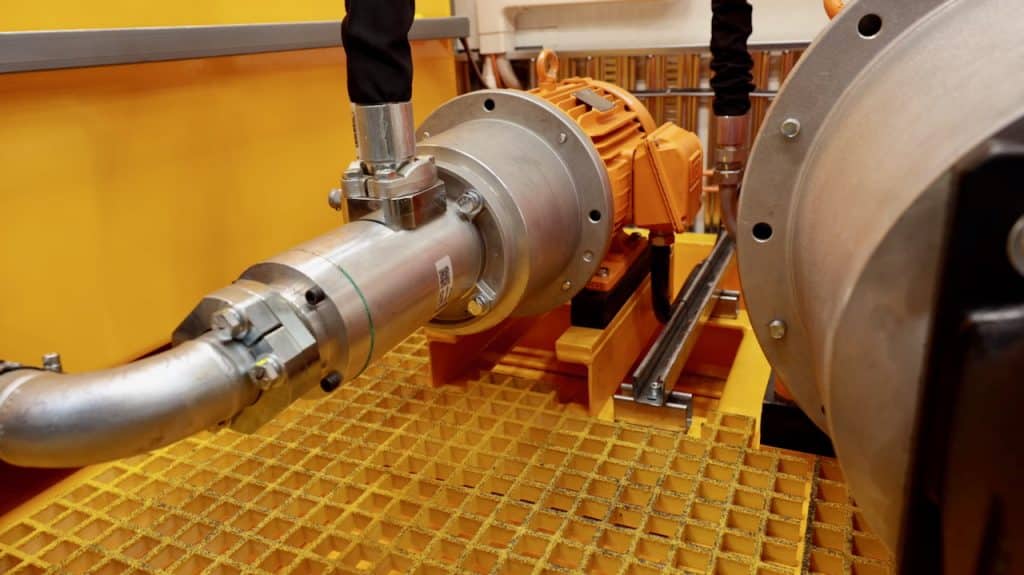
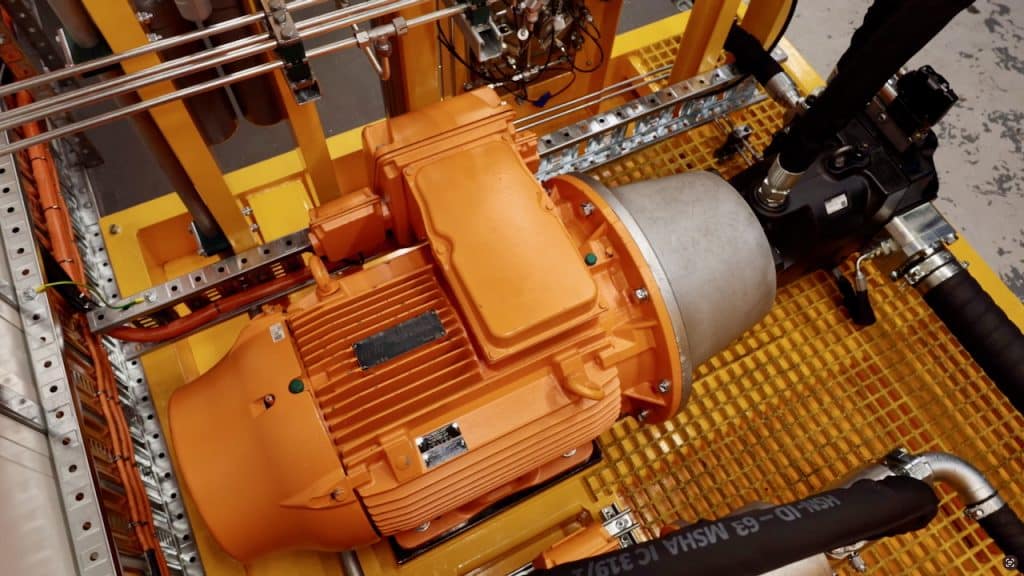
| HPU Specification | 75kW WEG mining-spec electric motor driving a Parker PV270 270cc variable displacement piston pump with torque control, load sensing and proportional electronic pressure control |
| Container Format | 20-foot side-opening shipping container – air conditioned, self-contained, transportable |
| Filtration | Pall duplex pressure filtration and offline filtration loop with electronic visual filter indicators |
| Factory Test Pressure | 330 bar across a temperature range of approximately 10°C to over 60°C |
| Project Timeline | Tender process from early 2024 | Contract awarded September–October 2025 | Design completed March–April 2026 | Factory testing complete |
Need high quality hydraulic solutions? Contact our team.
Background & Context
This hydraulic power unit was designed and built by Berendsen Fluid Power for one of the world’s largest zinc and lead deposits, located approximately 970 kilometres south-east of Darwin in Australia’s Northern Territory. The operation includes an open cut mine and processing facilities, with zinc and lead concentrate trucked to the Bing Bong Loading Facility on the Gulf of Carpentaria for export.
The project requirement was for a hydraulic system to support a new filter press installation at the mine site. The filter press forms part of a slurry handling and dewatering system – moving concentrate slurry from a storage tank to an elevated filter press to extract water from the slurry, then driving the press functions to remove the concentrate from the press so it can be bagged and exported.
In this type of continuous production environment, the hydraulic system underpins a critical 24/7 process. Unplanned downtime is extremely costly. The requirement was not simply for a hydraulic power unit – it was for a complete, maintainable, supportable system that could operate reliably in a remote, dusty, high-temperature environment and be backed by the technical capability to resolve issues quickly if they arose.
What the System Must Do
The HPU is required to drive two distinct functions in sequence.
1. Slurry Transfer – Diaphragm Pump Actuation
A hydraulic cylinder actuates a diaphragm pump that transfers concentrate slurry from a large storage tank to the filter press, located approximately 9 metres above ground and 40 metres away. The HPU must deliver controlled flow to operate this pump reliably and manage the pulsation inherent in a reciprocating cylinder-driven circuit.
2. Filter Press Operation
Once the filter press is filled with slurry and dewatered, the same HPU supports the press operation – applying the hydraulic force required to drive the press functions in order to remove the concentrate from the press so it can be bagged and exported. This is a cyclic, high-pressure process that demands consistent hydraulic performance throughout.
The Solution: A Containerised HPU Built for Remote Mining
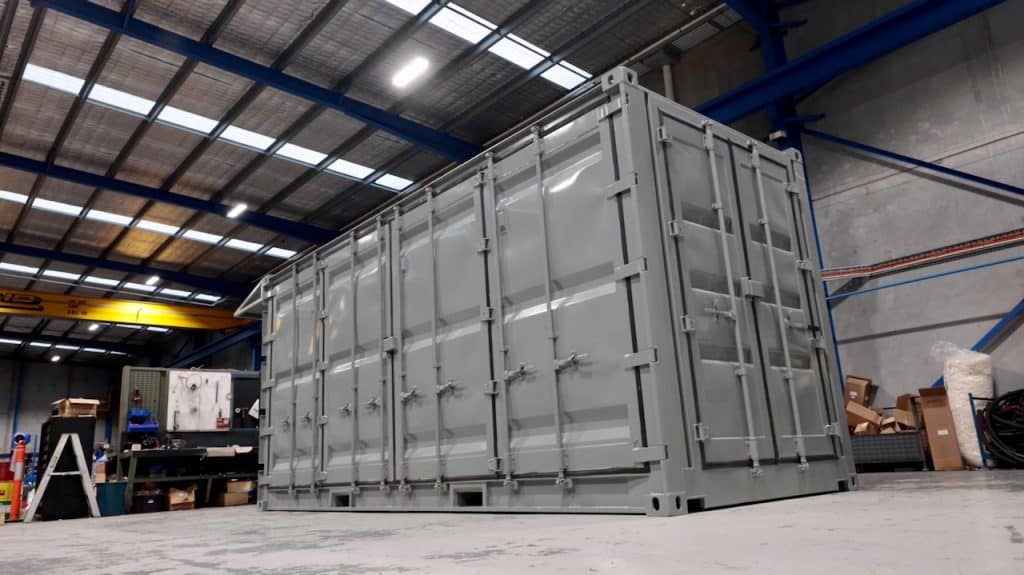
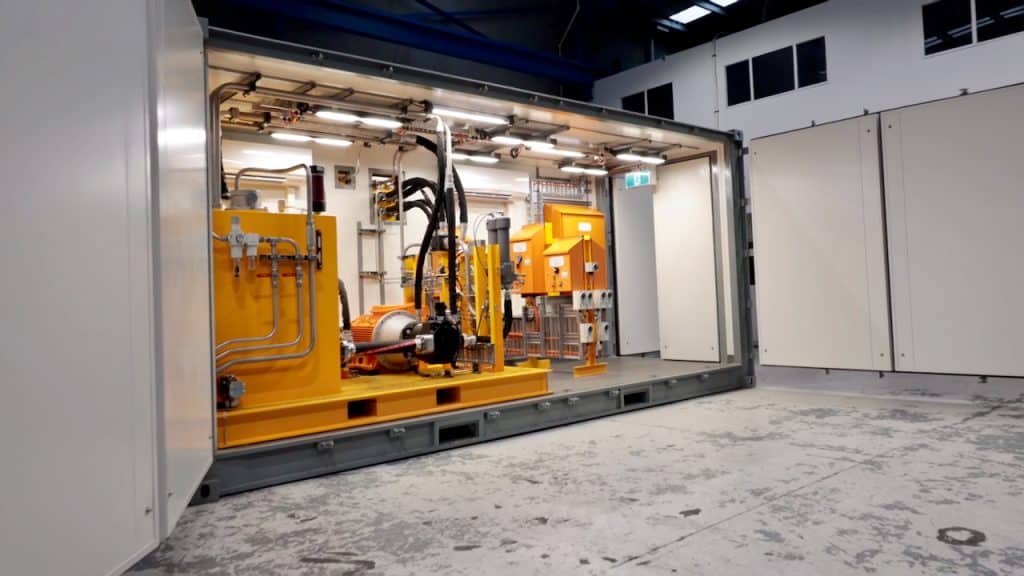
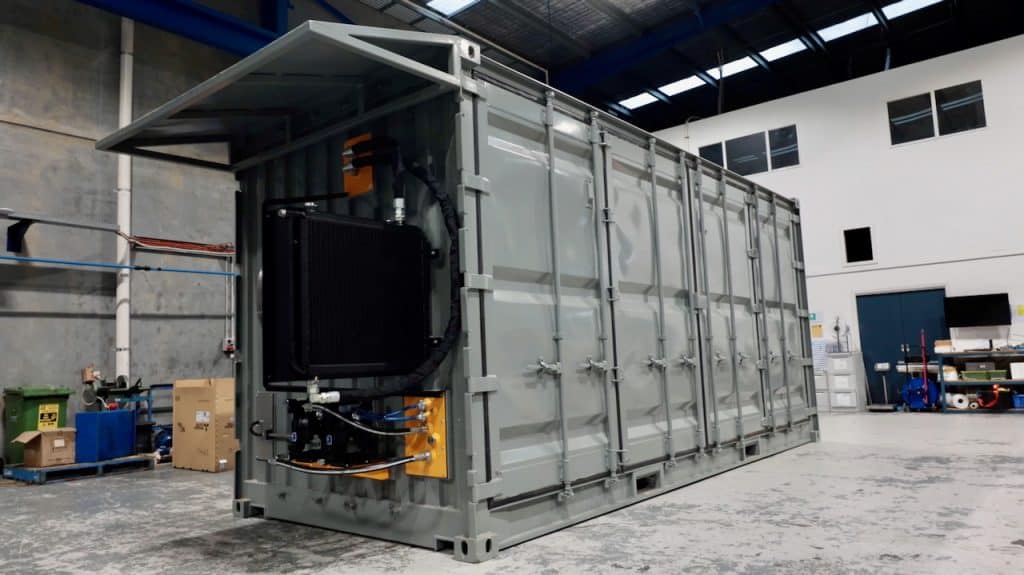
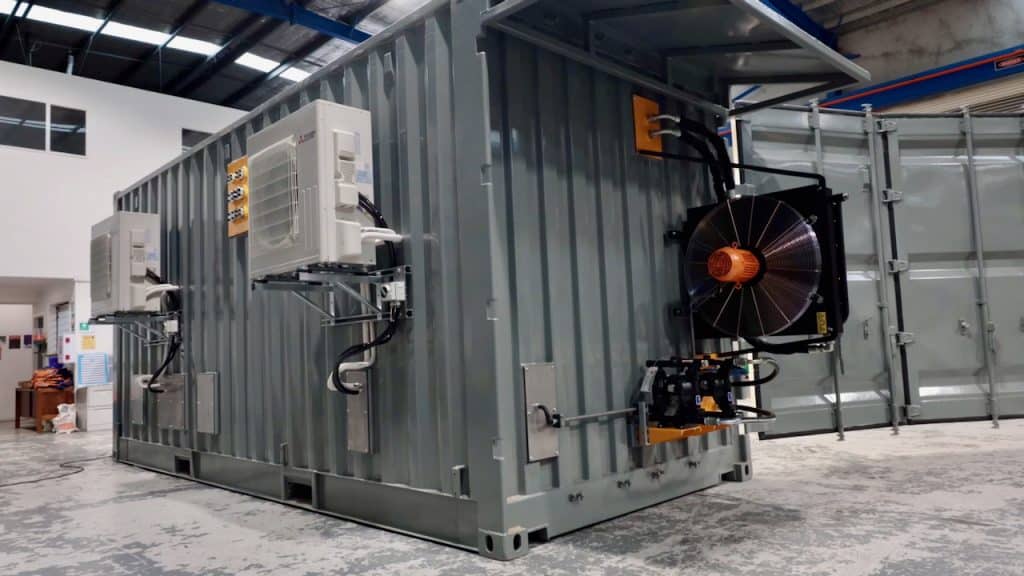
Berendsen designed and built a custom hydraulic power unit inside a 20-foot side-opening shipping container – the first time Berendsen had delivered an HPU in this format. The containerised approach creates a compact, transportable, self-contained system that can be built and tested off site, transported to a remote location, and installed with minimal on-site assembly.
For a site nearly 1,000 kilometres from Darwin, the logistical advantage of this approach is significant. Only external items such as the oil cooler and air conditioning units need to be removed for transport. Everything else arrives ready to connect and commission.
Air Conditioning Over Ventilation
The site originally requested ventilation for the container interior. Berendsen recommended air conditioning instead – a decision with important implications for long-term reliability.
In a dusty mining environment, a ventilation fan moves air but also draws dust directly into the equipment space. For hydraulic components, electrical systems and control hardware, that contamination accumulates over time and shortens component life. Air conditioning keeps dust-laden outside air out while managing the heat generated by the electric motors, hydraulic tank and associated equipment. The hydraulic oil itself is cooled via an external oil cooler; the air conditioning manages the internal heat load and protects the electrical and control systems.
The result is a hydraulic system housed in a cleaner, cooler and more controlled environment – designed to last longer and reduce avoidable maintenance issues under continuous operation.
Electronic Pressure Control with DCS Integration
The pump control system includes torque control, load sensing and proportional electronic pressure control. This gives the mine’s distributed control system (DCS) the ability to manage pump pressures remotely, without requiring maintenance personnel to manually adjust load-sense reliefs or similar settings at the HPU.
This capability was specifically recommended based on Berendsen’s experience with a similar installation at Mount Isa, where the ability to manage system pressures from the control room – rather than requiring manual adjustment at the unit – proved to be a meaningful operational advantage.
Designed for Safe, Efficient Maintenance
Maintainability was one of the strongest themes in the design process. In a 24/7 remote mining operation, a system that is difficult to maintain is a system that creates risk. Berendsen placed significant emphasis on layout logic, access, and the ability to perform routine maintenance tasks safely and without interrupting production.
Reservoir Management
The design includes a dedicated reservoir filling and draining arrangement using pneumatic diaphragm pumps, with controls positioned directly beside the tank level gauge. This allows an operator to stand at the reservoir, open the relevant valves and monitor the fill or drain process directly – rather than moving between a remote pump and the tank. It is a small design decision with a meaningful effect on how confidently and safely routine oil management can be performed.
Duplex Filtration – Change Filters Without Stopping the System
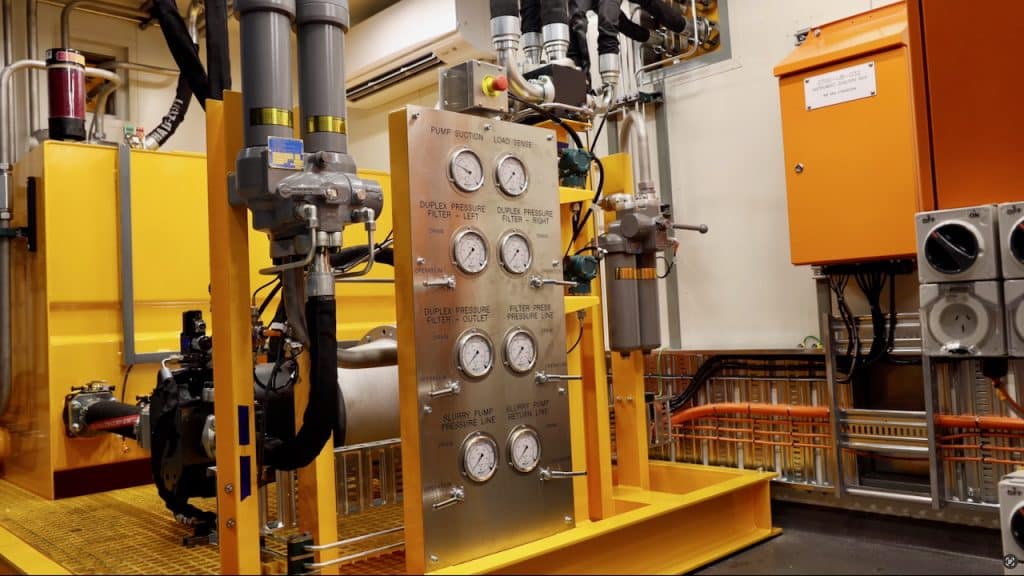
Both the main pressure filtration and the offline filtration loop use duplex filter arrangements. This allows filter elements to be changed while the system remains in operation – an important feature in a 24/7 production environment where stopping the system to change a filter creates unnecessary disruption and production risk.
A dedicated gauge and dissipation valve panel supports this further. Operators can monitor pressures and depressurise specific sections of the circuit before performing maintenance. This is particularly important when changing pressure filters, where one side of the duplex arrangement may still be holding pressure after the filter is switched to the other filter element.
Electronic Visual Filter Indicators
The filtration system includes electronic visual filter indicators inside the container. These provide an immediate, colour-coded maintenance cue without requiring the operator to check a screen or log into a control system. Below 20°C the indicator shows blue; above 20°C with a clean filter it shows green, progressing through yellow, orange and red as the filter loads. Maintenance teams have an at-a-glance view of filter condition at all times. The indicators also provide signals to the site DCS at 75% and 100% clogged.
Compliant Electrical Layout in a Constrained Space
Fitting a compliant electrical installation inside a 20-foot container while maintaining the panel clearances required under AS/NZS 3000 was one of the more demanding aspects of the design. Berendsen carefully balanced the hydraulic layout, electrical cabinet positioning, maintenance access pathways and safety clearances to satisfy both compliance requirements and practical serviceability within the available space.
Managing Pulsation in the Slurry Pump Circuit
Because the slurry diaphragm pump is actuated by a hydraulic cylinder, the flow profile is not constant. As the cylinder strokes, the system transitions between full flow and no flow at each end of stroke, creating pulsation through the pipework.
To manage this, Berendsen has included accumulators on both the pressure and tank lines for the slurry pump circuit. During site commissioning, the team will tune the accumulator pre-charges under real operating conditions to reduce pressure peaks and smooth the system response. This tuning phase is an important part of the commissioning process – the best outcome depends on adjusting the system based on actual operating behaviour rather than theoretical models alone.
Key Components
| Main electric motor | WEG mining-spec electric motor, 75kW |
|---|---|
| Main hydraulic pump | Parker PV270, 270cc variable piston pump |
| Pump control | Torque control, load sensing and proportional electronic pressure control |
| Pressure & offline filtration | Pall duplex filtration (pressure and offline loop) |
| Offline loop drive | Screw pump |
| Hydraulic oil cooling | External oil cooler |
| Environmental control | Air conditioning for container interior |
| Reservoir servicing | Pneumatic diaphragm pumps for filling and draining |
| Controls integration | DCS-integrated electronic pressure and flow control |
| Container format | 20-foot side-opening shipping container |
Compliance, Quality and Documentation
The project involved a substantial compliance and documentation requirement from the outset. Berendsen developed inspection and test plans at the beginning of the project, which were submitted to the client for review and sign-off, defining the quality requirements and inspection hold points for the build.
Fabrication and welding required full traceability. Welders submitted qualifications and welding procedures for acceptance before work proceeded. Welded components underwent full non-destructive testing, and all steelwork required material certificates. The completed system was factory pressure tested to 330 bar across a temperature range of approximately 10°C to over 60°C.
The system also had to comply with mine-site standards, customer specifications, and the electrical requirements of AS/NZS 3000 – all within the physical constraints of a containerised package.
Delivery Approach
The project followed a long tender, quotation and contract review process beginning in early 2024, with the contract awarded around September–October 2025. The main design phase extended through to approximately March–April 2026, followed by manufacturing drawings, fabrication, container modifications, HPU manufacture and factory acceptance testing.
A key delivery decision was to build the power unit on a separate frame, independent of the container. This allowed the HPU to be constructed and progressed while the container was still being prepared – an important schedule protection measure when the container supplier fell behind schedule. Once the container was ready, the HPU frame was installed and the internal fit-out completed.
The Melbourne team completed the container installation within a tight turnaround window. Factory testing was conducted to 330 bar across the full operating temperature range, with the system performing well throughout.
Project Timeline
| Tender and quotation process | From early 2024 |
|---|---|
| Contract awarded | September–October 2025 |
| Design phase | Through to approximately March–April 2026 |
| Fabrication, manufacture & FAT | Complete – tested to 330 bar across full temperature range |
| Site installation & commissioning | To follow – pipework installation, flushing, pressure testing, accumulator tuning and full system commissioning on site |
“A lot of thought went into making the system easy to operate and maintain. The duplex filtration, depressurisation valves, gauge panel and reservoir fill/drain setup are all there to make routine servicing simpler, safer and faster for the maintenance team.”
Glenn Silvers – Senior Fluid Power & Controls Engineer, Berendsen Fluid Power
Need high quality hydraulic solutions? Contact our team.
The Outcome
- Containerised HPU – first of type – Berendsen’s first delivery of an HPU in a containerised format: a transportable, self-contained system built and tested off site for deployment to a remote mining location.
- Factory tested to 330 bar – the completed system was pressure tested across a wide temperature range and performed to specification throughout, providing strong confidence ahead of site commissioning.
- Designed for 24/7 reliability – air conditioning, duplex filtration, electronic filter indicators, DCS integration and a maintainability-first layout combine to create a system built for continuous, unattended operation in a harsh environment.
- Whole-of-system delivery – design, fabrication, controls integration, compliance documentation, factory acceptance testing and site commissioning support delivered by a single team, reducing interface risk for the client.
This hydraulic power unit is a strong demonstration of Berendsen’s ability to design and deliver complete hydraulic systems for critical, remote mining applications – where reliability is non-negotiable and where the quality of engineering decisions made during design has a direct impact on years of operational performance.
Several things make this project worth highlighting as a Berendsen capability story:
- First containerised HPU delivery – packaging a mining-grade hydraulic power unit inside a 20-foot shipping container, fully self-contained, factory tested and ready to deploy, is a new capability that opens the door to similar applications across remote mining and industrial sites.
- Environment-first thinking – the decision to recommend air conditioning over ventilation is a good example of how Berendsen’s engineering experience shapes design outcomes. The technically correct answer and the easy answer are not always the same thing.
- DCS integration and remote pressure control – recommending electronic pressure management based on lessons from a comparable Mount Isa installation shows how Berendsen draws on project experience to improve outcomes for new clients – not just delivering what was asked for, but what will work best in practice.
- Maintainability as a design discipline – duplex filtration, safe depressurisation, reservoir access, electrical compliance and colour-coded filter indicators are not afterthoughts. They are evidence of a team that understands what it means to maintain a system in a remote 24/7 environment.
- Whole-of-system accountability – from inspection and test plans through to factory acceptance testing and site commissioning support, Berendsen carries responsibility for the complete outcome, not just the components.
For mining and industrial customers evaluating hydraulic contractors for remote, critical-process applications, this project is a direct reference point for what Berendsen’s engineering-led approach looks like in practice.
Need high quality hydraulic solutions? Contact our team.