

Repair & Service
Hydraulic Cylinder Repairs – The Complete Expert Guide
Hydraulic cylinders are the muscle behind heavy equipment across mining, construction, manufacturing, agriculture and transport. When they fail, downtime is immediate, expensive and disruptive. This guide explains how hydraulic cylinders fail, how they are professionally repaired, how they are tested, and how to extend their service life using proven engineering best practices.
Hydraulic Cylinder Repairs for Industrial Equipment
When a hydraulic cylinder fails, your gear stops earning. Downtime, safety risks and missed deadlines all start from one point of failure. That’s why professional, properly engineered hydraulic cylinder repairs are critical for mining, construction, manufacturing and agricultural operations.
This guide explains how hydraulic cylinders fail, how they’re repaired and tested, and what you can do to extend their service life and reduce unplanned downtime.
What Are Hydraulic Cylinder Repairs?
Hydraulic cylinder repairs restore a worn or damaged cylinder back to safe, reliable operation. A professional repair goes far beyond a quick seal change. It typically includes:
- Strip and detailed inspection
- Precision measurement of all critical surfaces
- Machining and honing to restore tolerances
- Surface engineering (e.g. hard chrome, HVOF, laser cladding) where required
- Correct seal selection and installation
- Clean-room style reassembly and full pressure testing
When done correctly, high-quality hydraulic cylinder repairs can restore or even improve on original performance and significantly extend service life.
Common Symptoms of Hydraulic Cylinder Failure
Early detection is the easiest way to reduce repair cost and downtime. If you operate heavy machinery, watch for these common signs that hydraulic cylinder repairs are needed.
1. External Oil Leaks
What you’ll see:
- Oil stains or puddles around the cylinder
- Wet or discoloured rod and end-cap areas
- Fluid seeping from ports or gland
What it means:
External leakage usually points to failed seals, damaged glands or worn rod surfaces. Leaks reduce system pressure, waste fluid, increase fire and slip risk, and can lead to environmental issues. Cylinders in this condition should be repaired as soon as possible.
2. Internal Leakage and Cylinder Drift
What you’ll notice:
- Cylinder won’t hold load – rod creeps or drifts
- Machine feels “weak” under load
- Longer cycle times and reduced productivity
What it means:
Internal leakage occurs when fluid bypasses the piston due to worn seals, bore damage or bent rods. It’s harder to spot because you may not see oil outside the cylinder. Drift and lack of holding power are key red flags that a proper strip, inspection and hydraulic cylinder repair is required.
3. Jerky, Noisy or Uneven Movement
Typical symptoms:
- Jerky motion during extension or retraction
- Stick–slip behaviour
- Knocking, rattling or hissing sounds
What it means:
This can indicate air in the system, cavitation, contamination, bent rods, worn bearings or misalignment. Left unresolved, these problems accelerate wear on rods, bores and seals, making repairs more extensive and expensive later.
4. Overheating and Loss of Power
Signs to look for:
- Abnormally hot hydraulic oil
- Fluid darkening or smelling burnt
- Noticeable loss of cylinder force
What it means:
Overheating is often a sign of internal bypass, high friction from worn components or relief valve issues. Excessive heat rapidly destroys seal materials and accelerates oil degradation, leading to cascading failures across the whole hydraulic system.
5. Visible Mechanical Damage
Typical findings:
- Scored or scratched piston rods
- Rust or corrosion on exposed surfaces
- Bent rods or misaligned mounts
- Seal material extruding from glands
What it means:
Mechanical damage is both a symptom and a cause. Scoring destroys seals every time the cylinder strokes. Bent rods cause side-loading, which wears bores and bearings. These units need full hydraulic cylinder repair and, in many cases, advanced surface engineering.
Our Hydraulic Cylinder Repair Process
A high-quality hydraulic cylinder repair isn’t guesswork – it’s a controlled engineering process. A typical workflow includes the following stages.
1. Safe Strip and Disassembly
- System is fully depressurised and locked out
- External surfaces are cleaned to prevent contamination
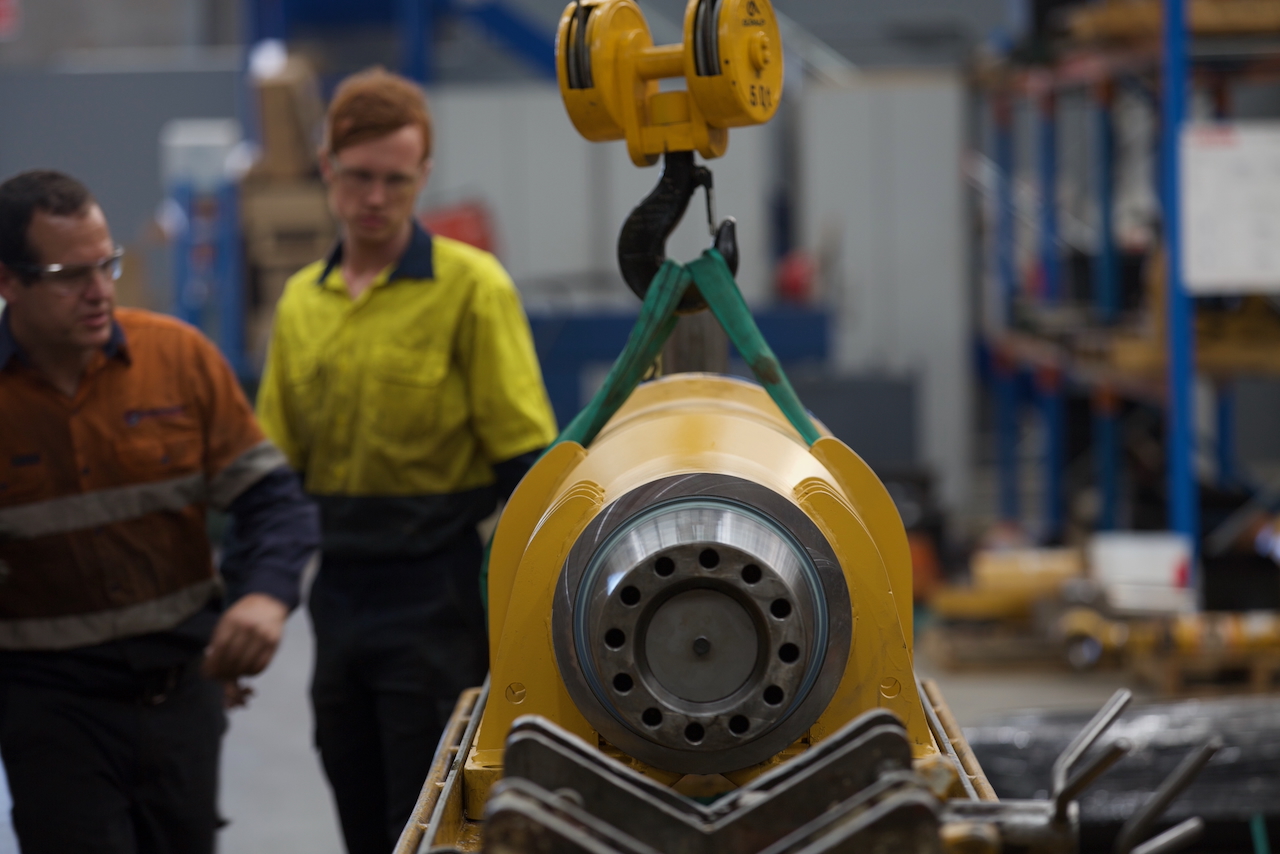
- Cylinder is secured on a dedicated bench or with overhead cranes
- Glands, end caps and rods are removed using appropriate tooling
- Seals are removed carefully and kept for failure analysis
Throughout this stage, experienced technicians treat the cylinder like a forensic investigation, looking for the real cause of failure – not just the symptoms.
2. Inspection and Evaluation
Once stripped, all components are cleaned and inspected. This often includes:
- Bore measurement for taper, ovality and scoring
- Rod inspection for straightness, chrome condition and corrosion
- Piston inspection for cracks, groove damage and concentricity
- Bearing, guide ring and gland checks for wear and seizure marks
- Non-destructive testing (e.g. magnetic particle, ultrasonic) where required
At this point, the technician can determine whether the cylinder is economical to repair or whether certain parts need to be replaced or remanufactured.
3. Machining and Bore Honing
Where damage is within repairable limits, machining restores critical dimensions and finishes:
- Honing to remove high spots and restore oil-retaining cross-hatch in the bore
- Boring and oversize piston manufacture if the bore is too damaged for standard honing
- Rod straightening and grinding to bring runout and diameter back within tolerance
Correct surface finish (Ra) is essential for seal performance and oil retention, so dedicated cylinder honing machines and experienced operators are crucial.
4. Advanced Surface Engineering
For heavily worn or high-duty applications, advanced surface treatments significantly extend cylinder life:
- Hard chrome plating – low friction, excellent wear and corrosion resistance
- Sulphamate nickel – superior corrosion resistance in aggressive environments
- Laser cladding / EHLA – metallurgical bonding of hard-wearing alloys with minimal heat distortion
- HVOF coatings – very high hardness and exceptional wear/corrosion performance
These processes allow cylinders, rods and clevis eyes that would normally be “beyond repair” to be recovered to a high standard.
5. Seal Selection and Clean Reassembly
Once metal components are restored, the cylinder is reassembled to precise standards:
- All parts are thoroughly cleaned and dried
- Correct seal materials (NBR, FKM, PU, PTFE, etc.) are selected for the application
- Seals are installed with specialist tools to avoid cuts or overstretching
- Guide rings, wear bands and wipers are fitted in the correct sequence
- Glands and end caps are torqued to manufacturer specifications
- Alignment and concentricity are checked during assembly
Cleanliness during hydraulic cylinder repairs is critical – most premature failures are caused by contamination introduced during maintenance, not by design.
6. Pressure Testing and Functional Checks
Every repaired cylinder should be tested before it returns to service:
- Hydrostatic pressure testing at up to 1.5× working pressure
- Leak testing for both external and internal leakage
- Drift and pressure-holding tests for double-acting cylinders
- Full-stroke functional testing under load where possible
Only once the cylinder passes these tests should it be returned to the machine.
Preventive Maintenance for Hydraulic Cylinders
The best hydraulic cylinder repair is the one you don’t need to do. A simple preventive maintenance routine dramatically extends cylinder life.
Daily Checks
- Look for external leaks around rods, ports and hoses
- Wipe rods clean to prevent dust and grit being dragged into seals
- Listen for unusual noises during operation
- Monitor hydraulic oil temperature and levels
Regular Inspection
At scheduled intervals:
- Inspect cylinder rods for scoring, rust or damage
- Check mounting pins and bushes for wear and misalignment
- Inspect hoses and fittings for cracking or leaks
- Conduct oil sampling and ISO 4406 particle count checks
Early intervention on seals, rods and contamination is far cheaper than a full cylinder rebuild or machine failure in the field.
Hydraulic Fluid Cleanliness and Cylinder Life
Contamination is responsible for the majority of hydraulic failures. Even the best hydraulic cylinder repairs will not last if the oil is dirty.
To protect your cylinders:
- Store and handle oil correctly – keep drums sealed and clean
- Use quality filtration and change filters on schedule
- Keep fill points, breathers and reservoir lids clean
- Use lint-free rags and clean tools during maintenance
- Monitor ISO 4406 cleanliness levels and adjust filtration if required
Clean oil protects not just cylinders, but pumps, valves and every other hydraulic component in the system.
Why Professional Hydraulic Cylinder Repairs Pay for Themselves
Trying to “get by” with cheap, superficial fixes – quick seal swaps, unmeasured straightening or untested welding – usually creates bigger problems later:
- Shortened component life
- Repeated breakdowns and call-outs
- Safety and environmental risks
- Damage to other hydraulic components
By contrast, a professionally executed hydraulic cylinder repair delivers:
- Restored performance and reliability
- Longer service life between failures
- Lower total cost of ownership
- Reduced downtime and disruption
Talk to a Hydraulic Cylinder Repair Specialist
If you’re seeing leaks, drift, loss of power or visible rod damage, it’s time to get your cylinders assessed properly.
Berendsen Fluid Power provides end-to-end hydraulic cylinder repairs – from strip, assessment and machining through to advanced surface treatments, seal replacement, contamination-controlled assembly and full pressure testing.
Whether you’re running mining gear, construction equipment, industrial machinery or agricultural plant, we can help you get back up and running quickly and safely.
Ready to book a cylinder in?
Get in touch today to arrange a hydraulic cylinder inspection or request a repair quote.
