


Overview
Project Snapshot
Background & Context
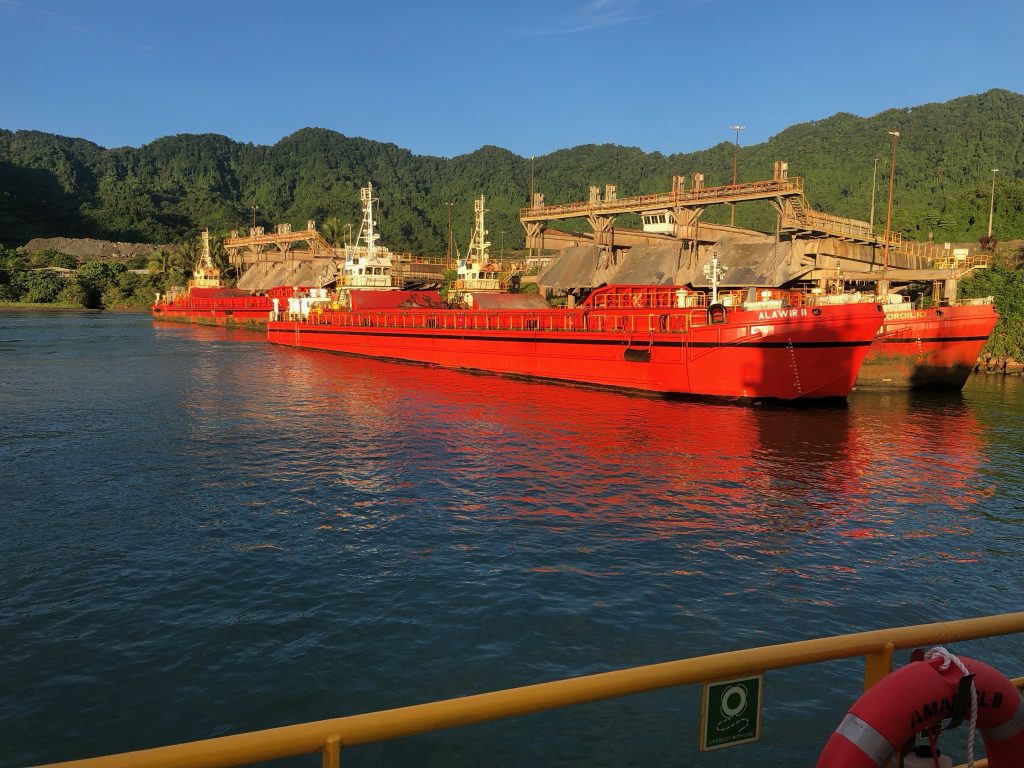
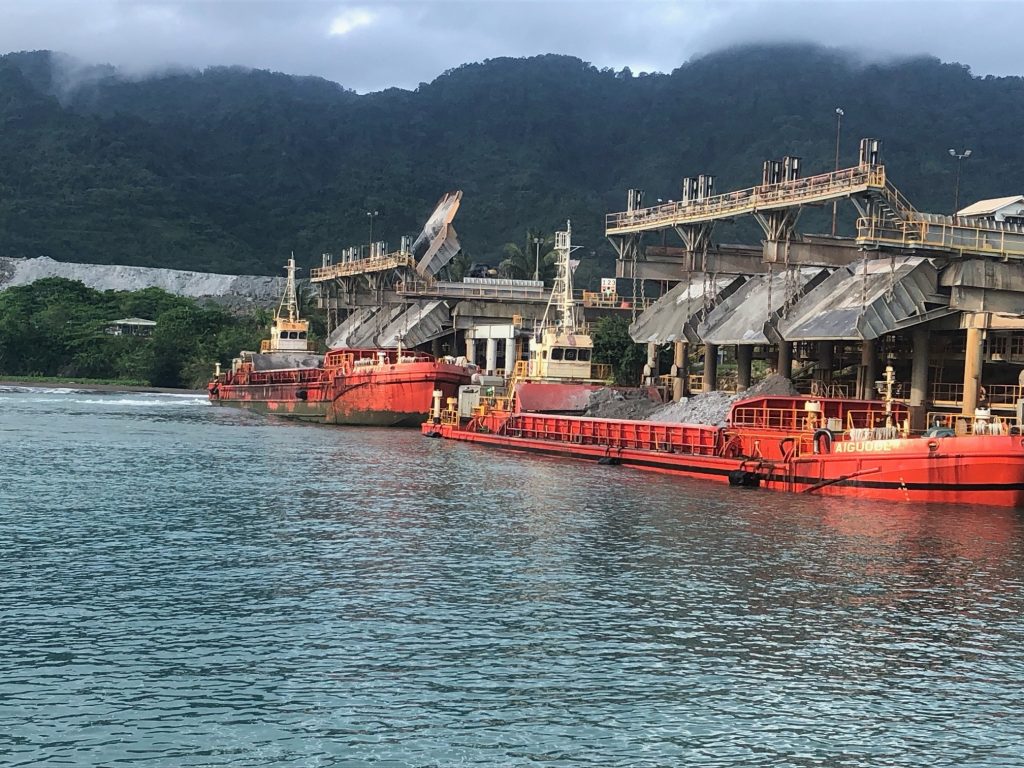
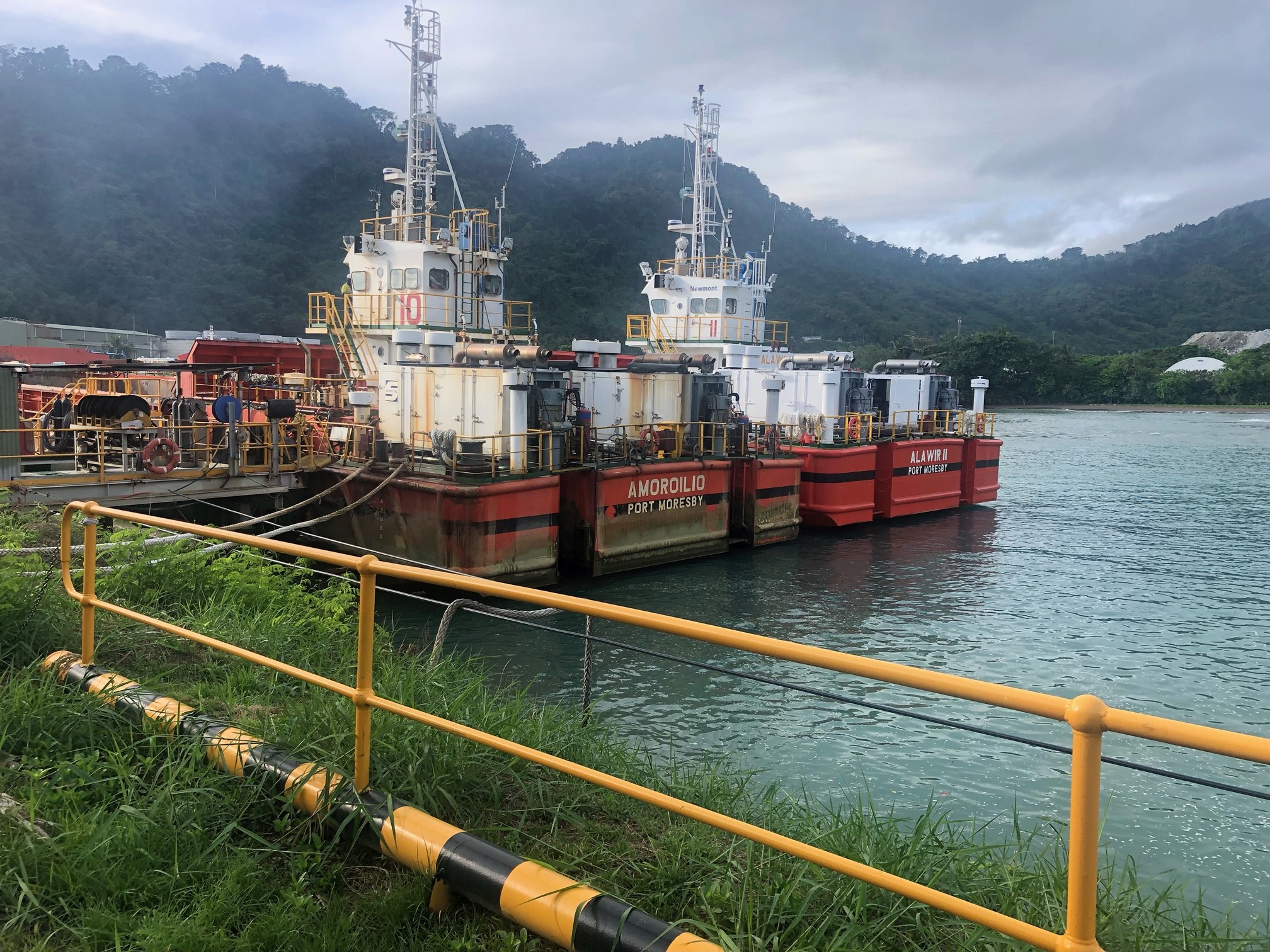
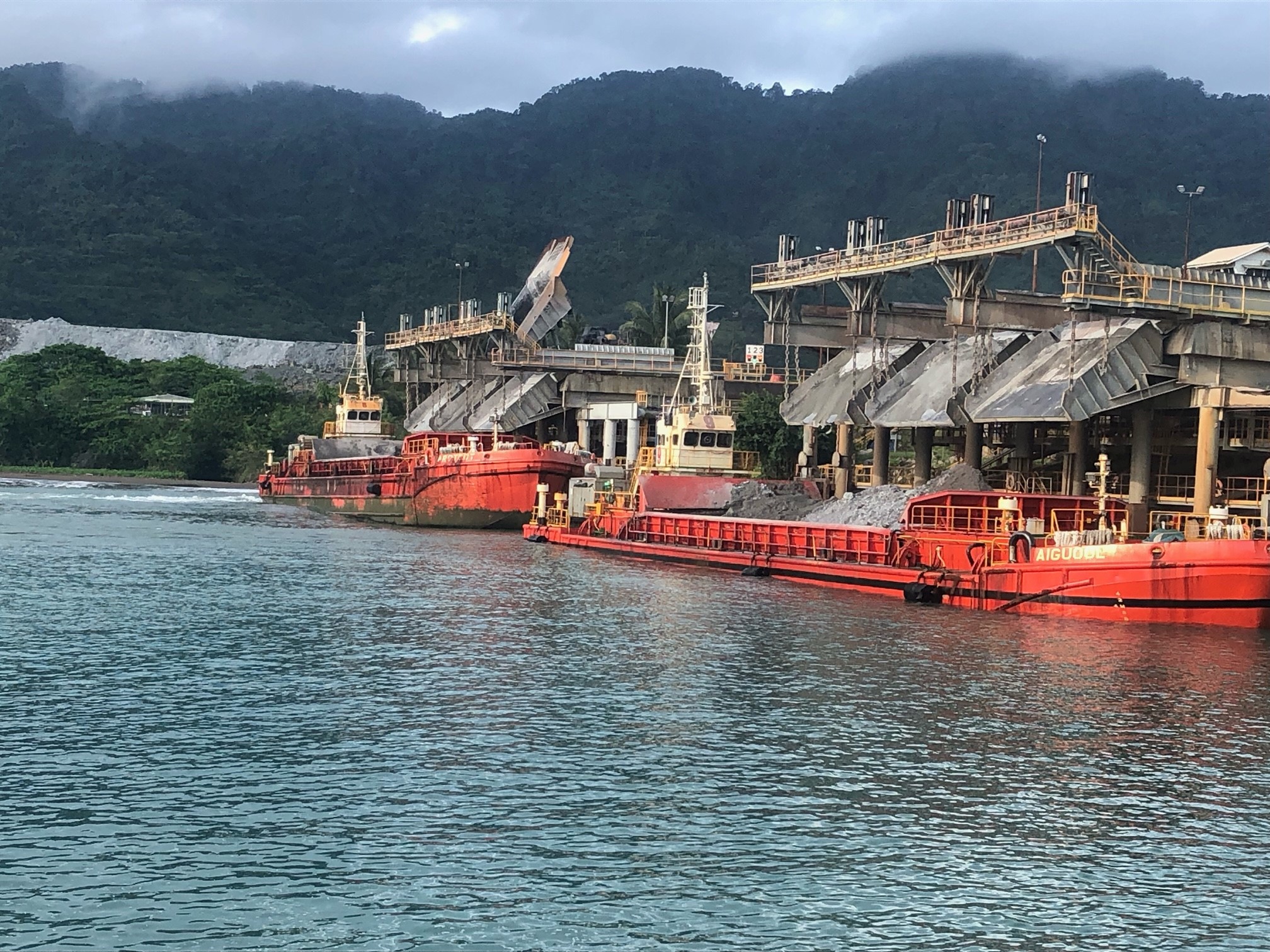
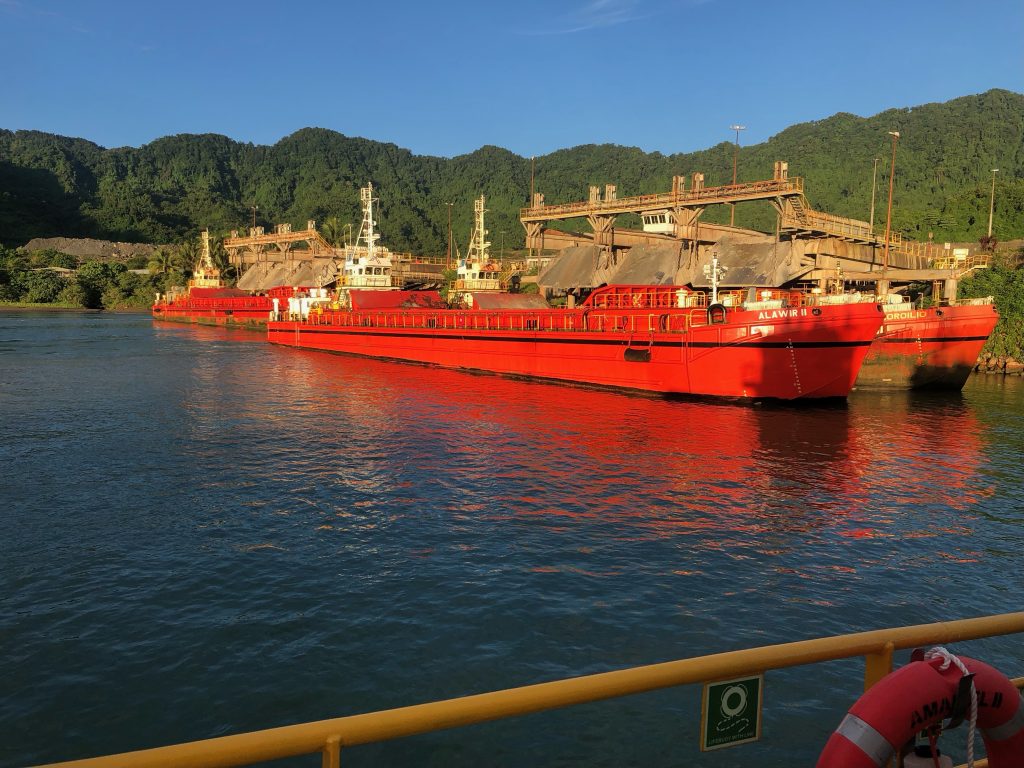
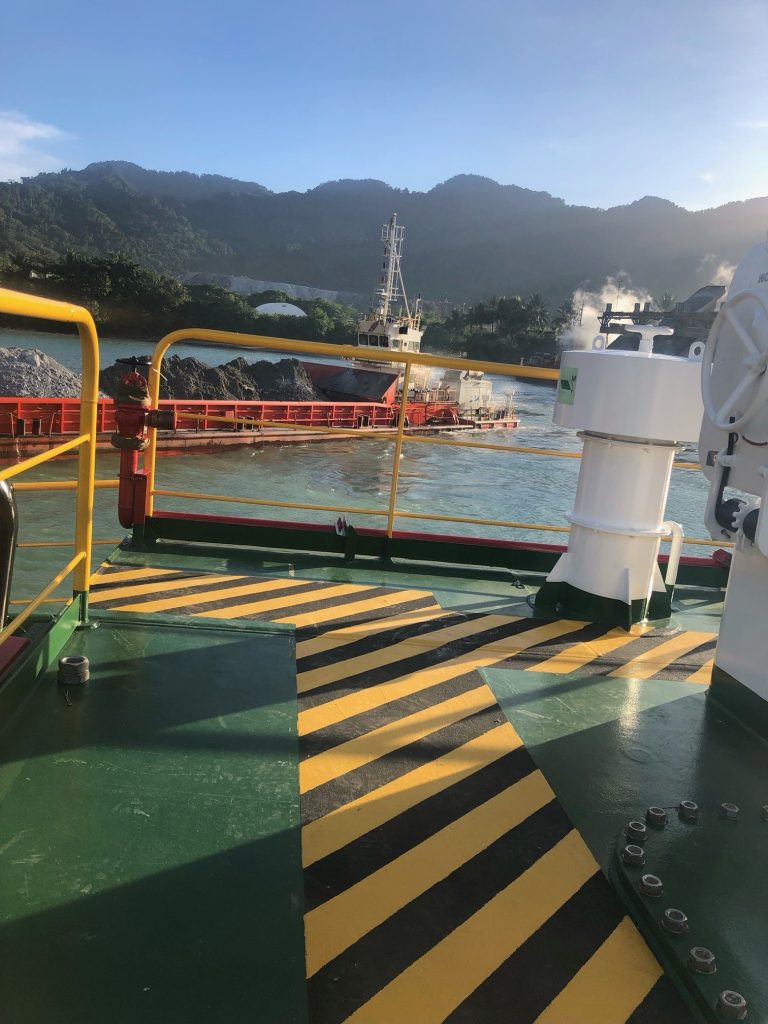
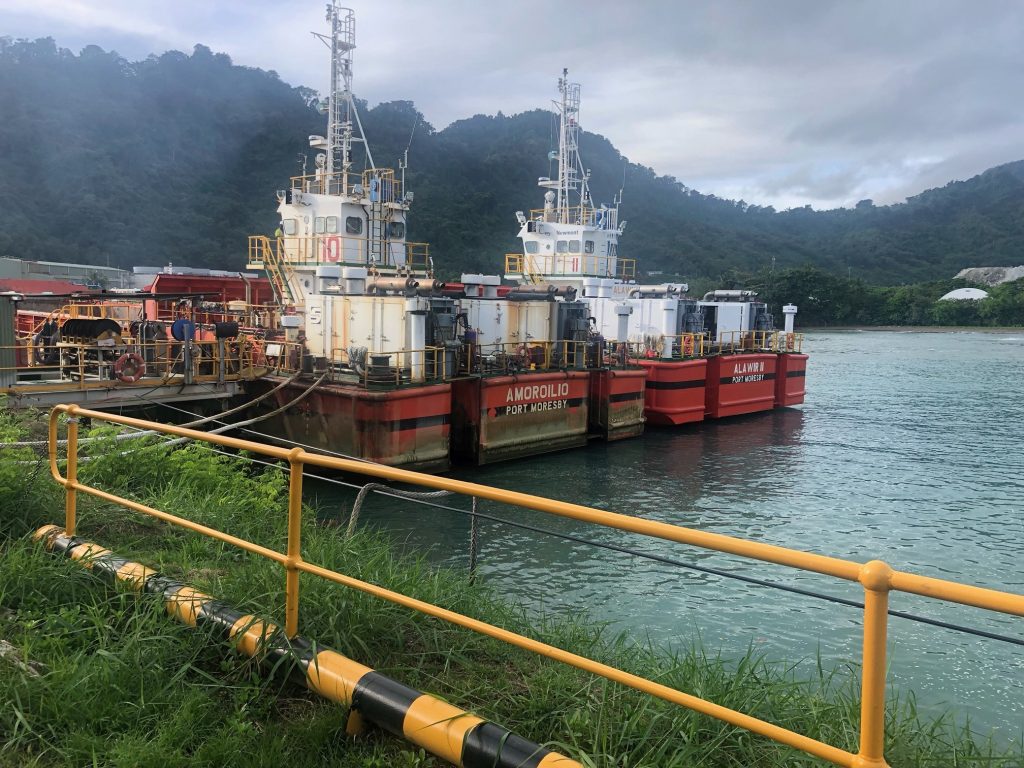
At a large gold mine operation in Lihir, Papua New Guinea, specialised split barges are a critical part of the site’s material handling cycle. These vessels carry overburden from the mine and discharge it offshore by opening hydraulically actuated doors along the bottom of the hull – a fast, repeatable cycle that keeps the mining operation moving.
The vessels are built by a large global shipbuilder, with construction taking place at their Batam, Indonesia facility. The critical onboard hydraulic systems – the mechanisms that make these vessels actually function – are supplied, installed, and commissioned by Berendsen Fluid Power.
Berendsen has supported this vessel program for approximately 25 years, originally under the Pacific Hydraulics name and continuing today. Berendsen is now the stipulated OEM for the hydraulic package, carrying full responsibility for design continuity, build quality, factory testing, and commissioning across each new vessel build.
What the System Must Do
A split barge discharges its load by splitting open along the bottom of the hull. Two large hull sections are pulled apart by hydraulic cylinders, creating a gap through which the cargo drops under gravity. Once discharged, the hull closes and the vessel returns to the loading wharf for the next cycle.
Berendsen’s hydraulic package must satisfy two distinct operational requirements simultaneously:
1. Fast, Repeatable Hopper Door Actuation
The dumping cycle depends on speed. The hopper doors must open promptly, discharge the load, and close again so the vessel can return to the wharf and repeat. With eight large hydraulic cylinders doing the work, achieving that speed requires high flow capability, precise sequencing, and stable control throughout the cycle.
2. Constant-Tension Bow Winching During Loading
As overburden is loaded onto the barge, the vessel’s draft changes. Combined with swell and water movement, this can cause the vessel to push away from the berth. Maintaining hard contact with the wharf is not a convenience – it is a safety and productivity requirement. The bow winch system must actively manage tension throughout the loading cycle to hold the vessel in position under continuously changing conditions.
Hydraulic Systems Supplied
Bomb-Bay Hopper Door System
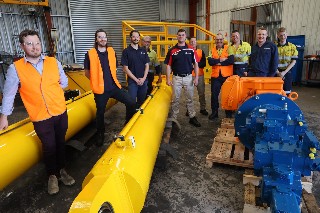
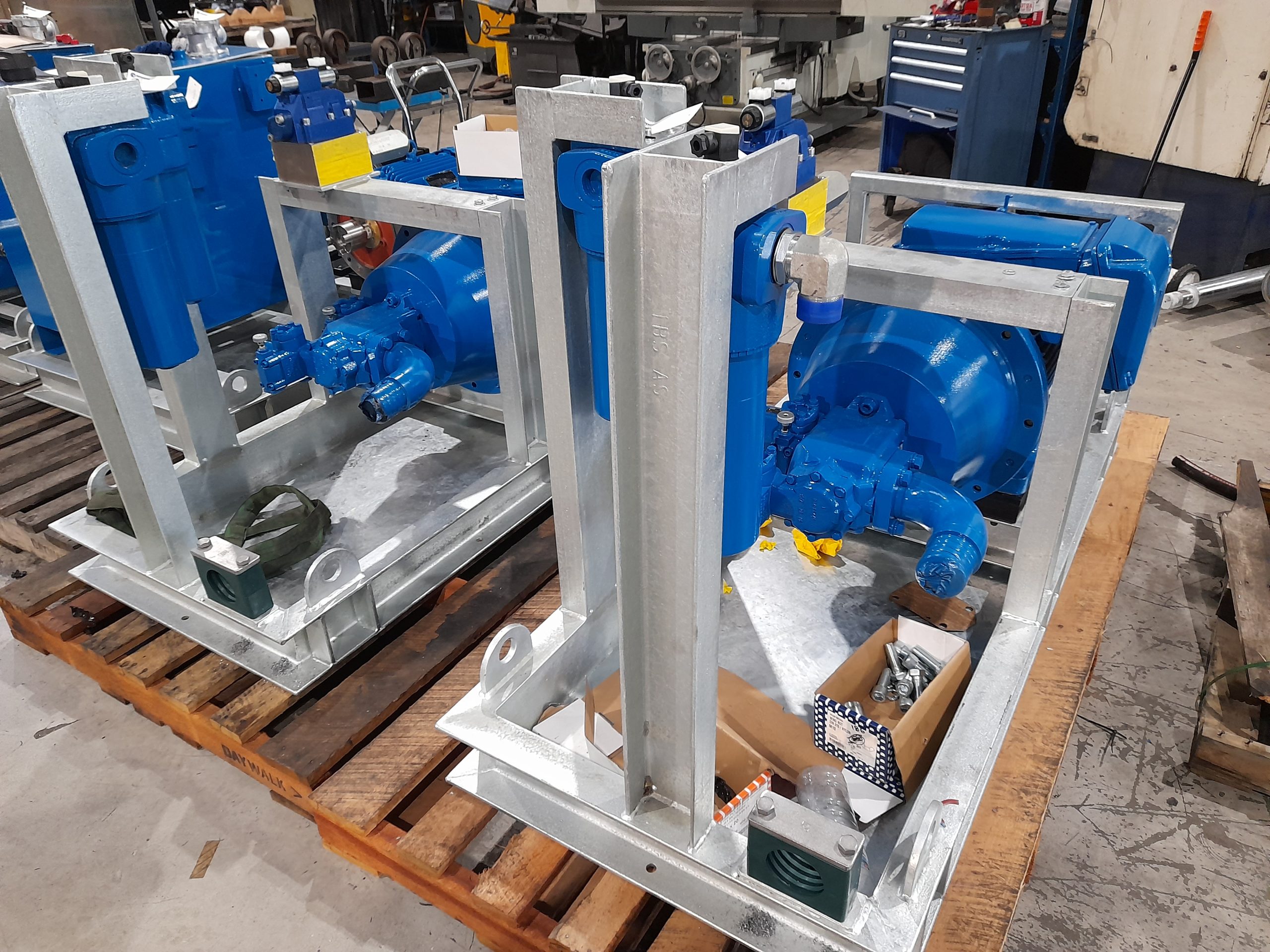
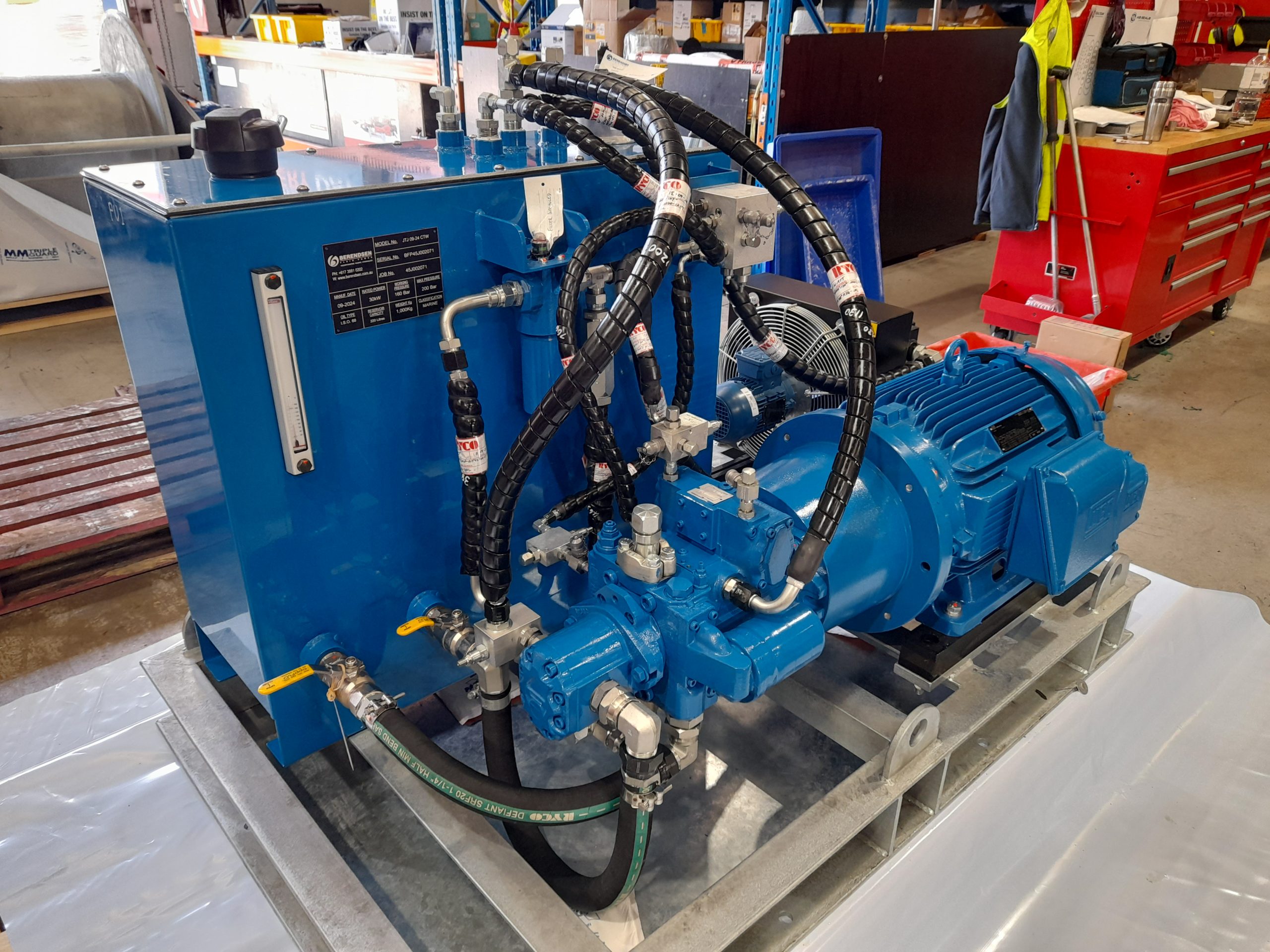
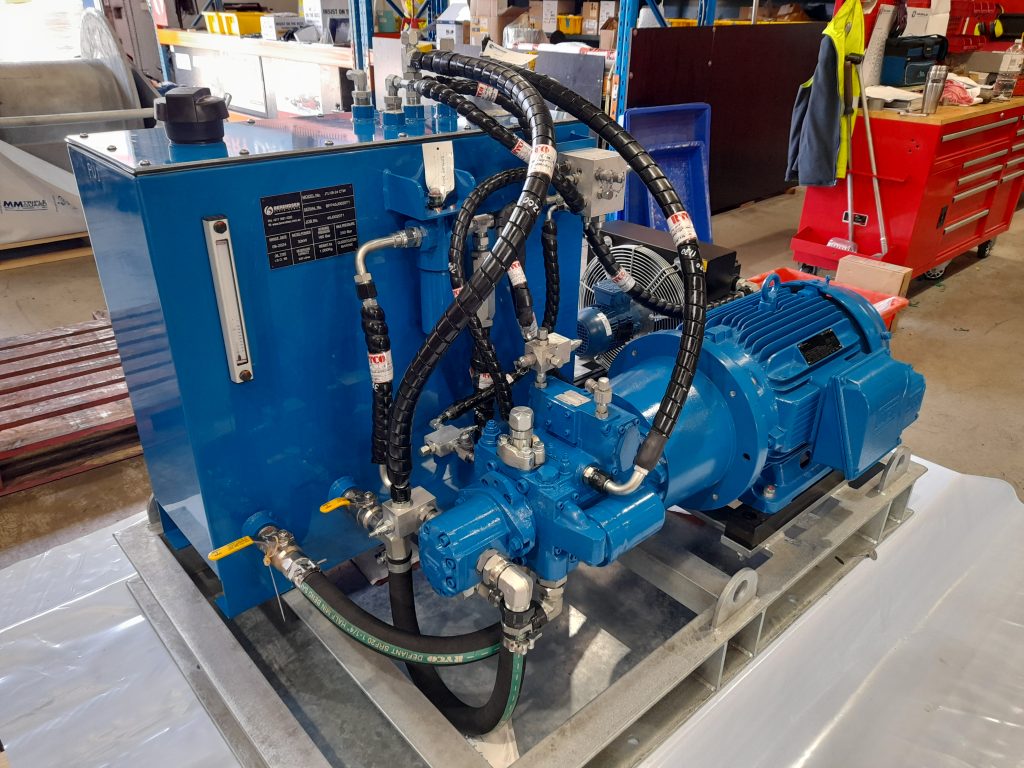
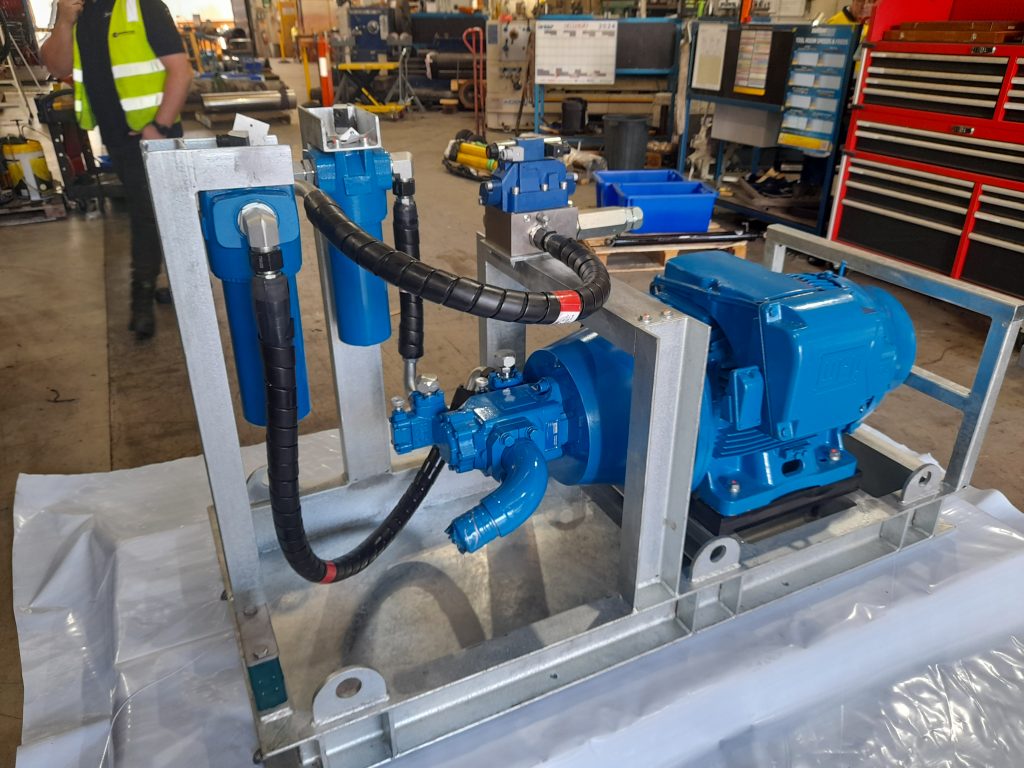
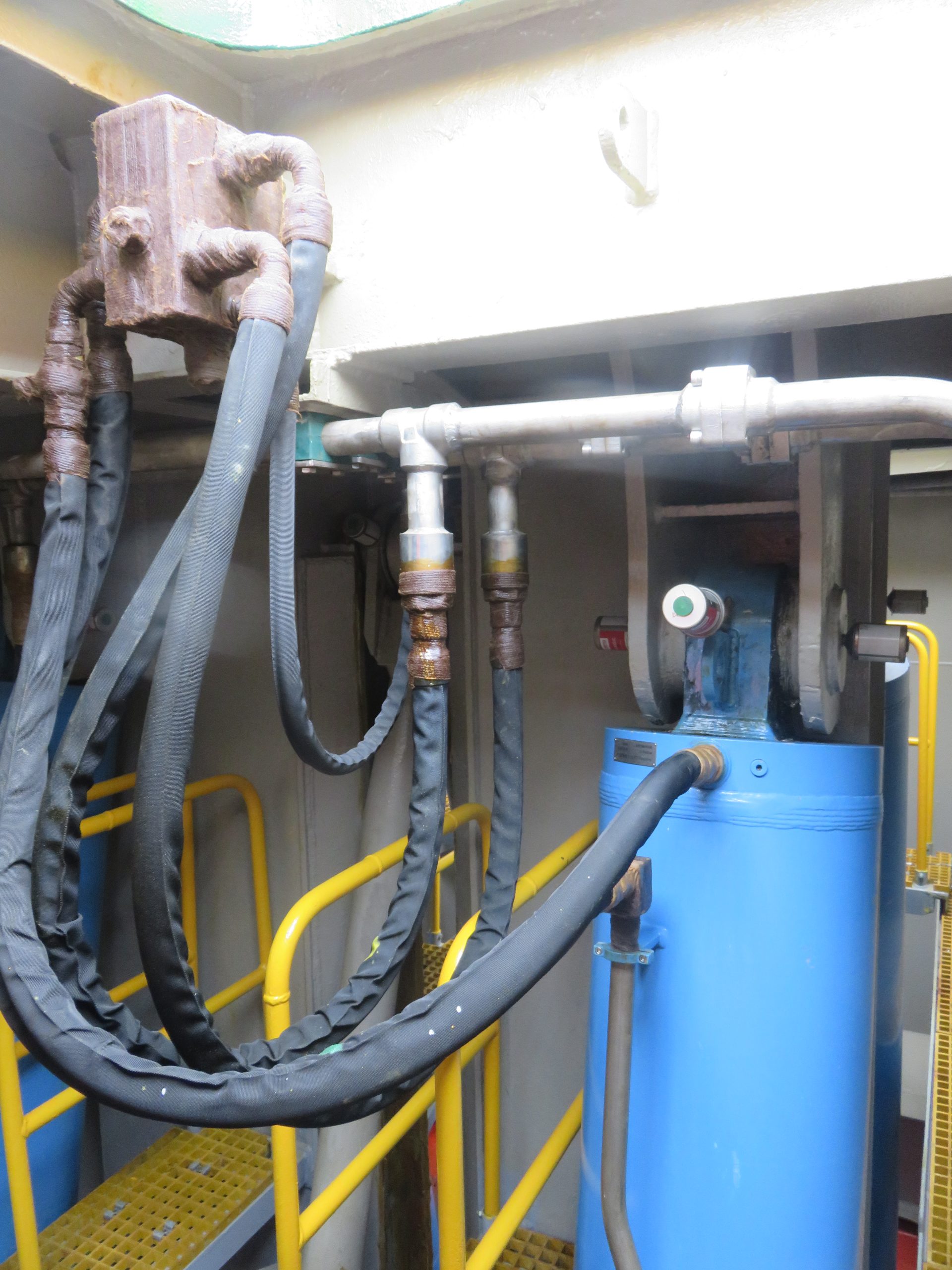
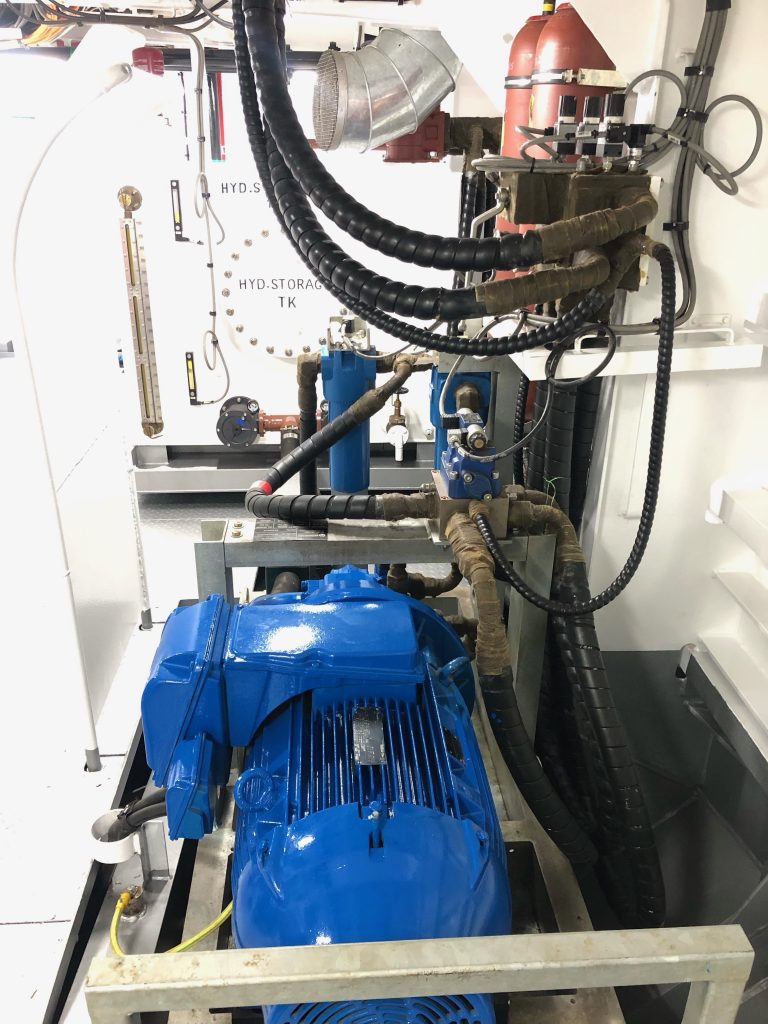
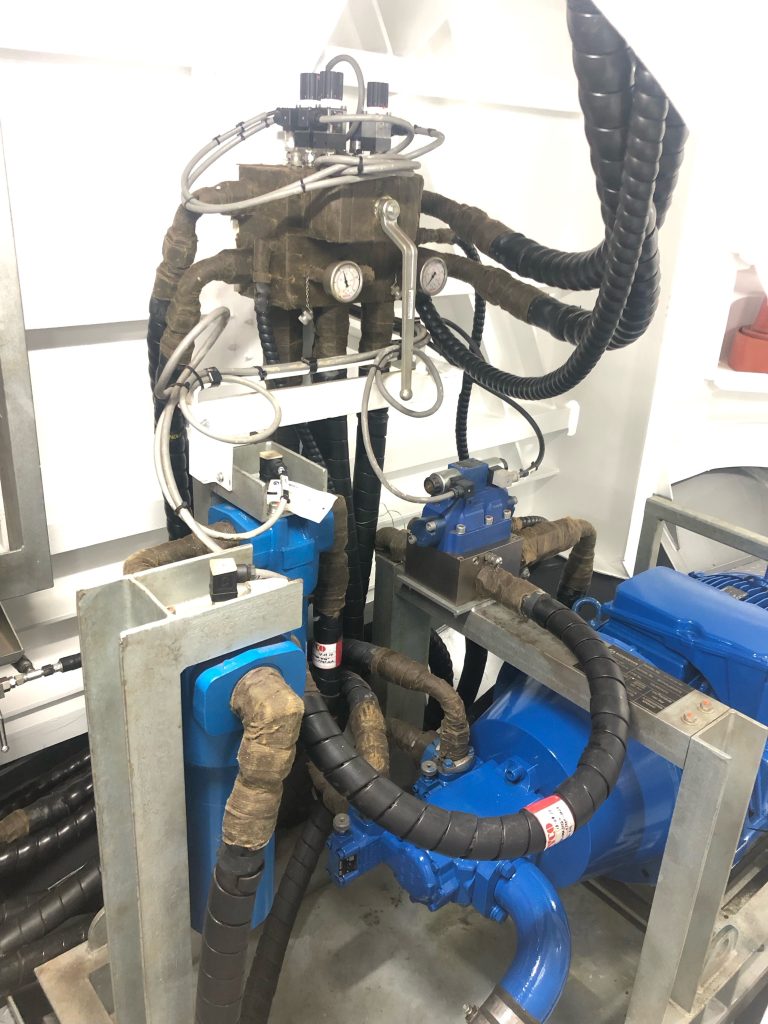
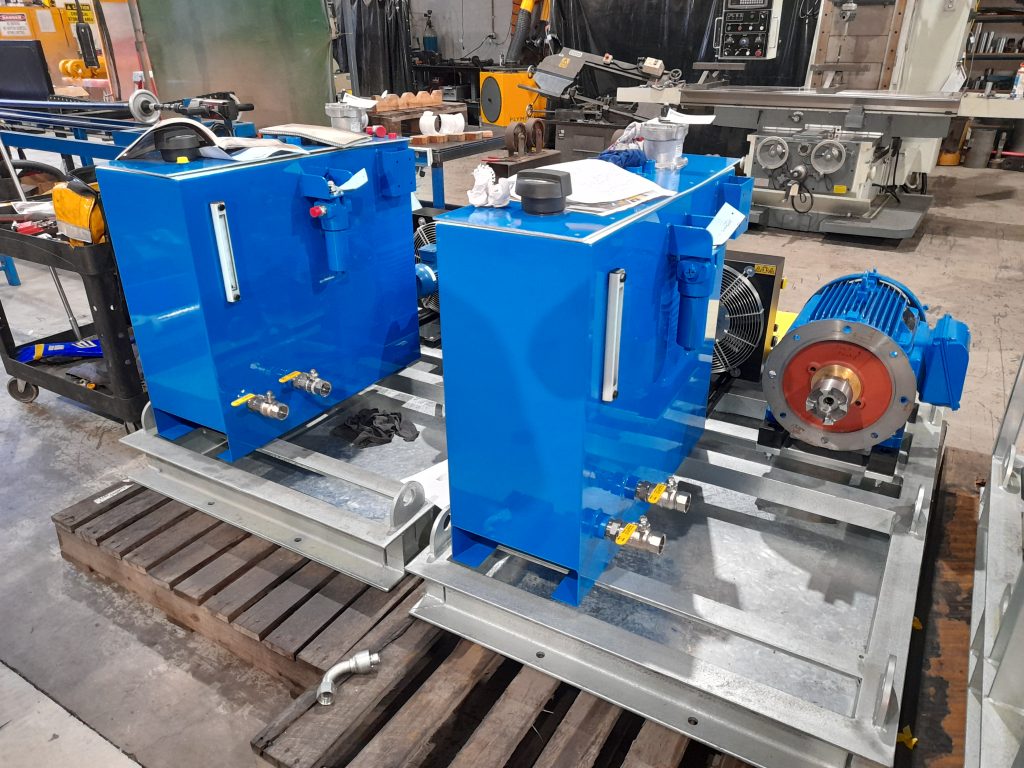
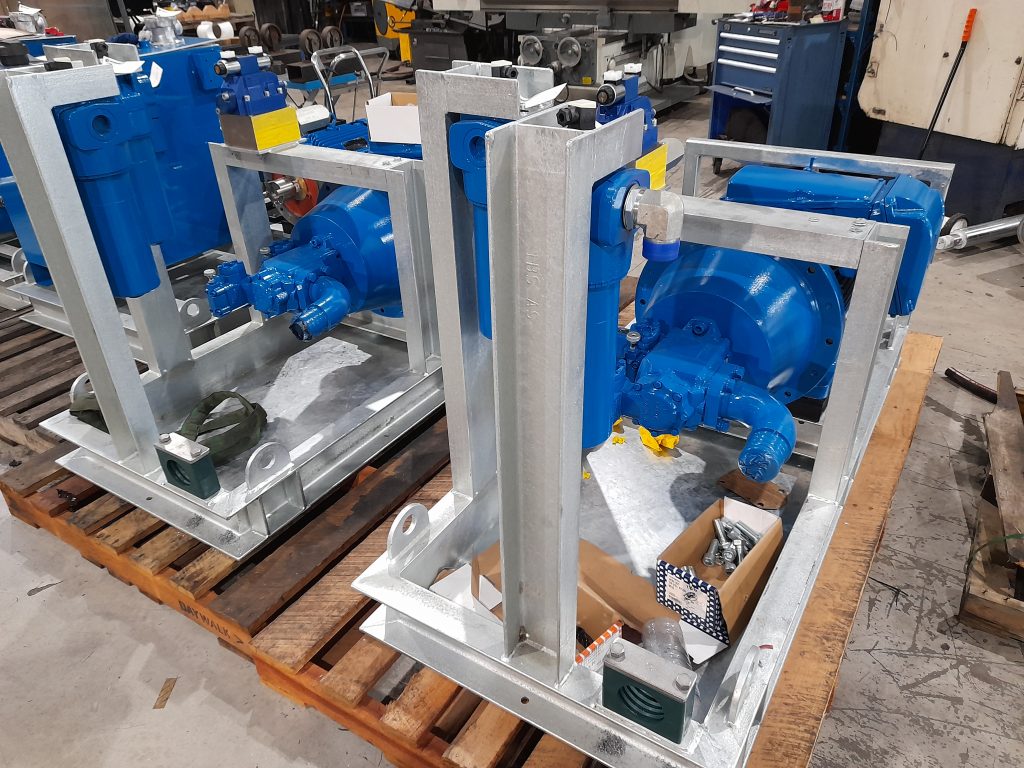
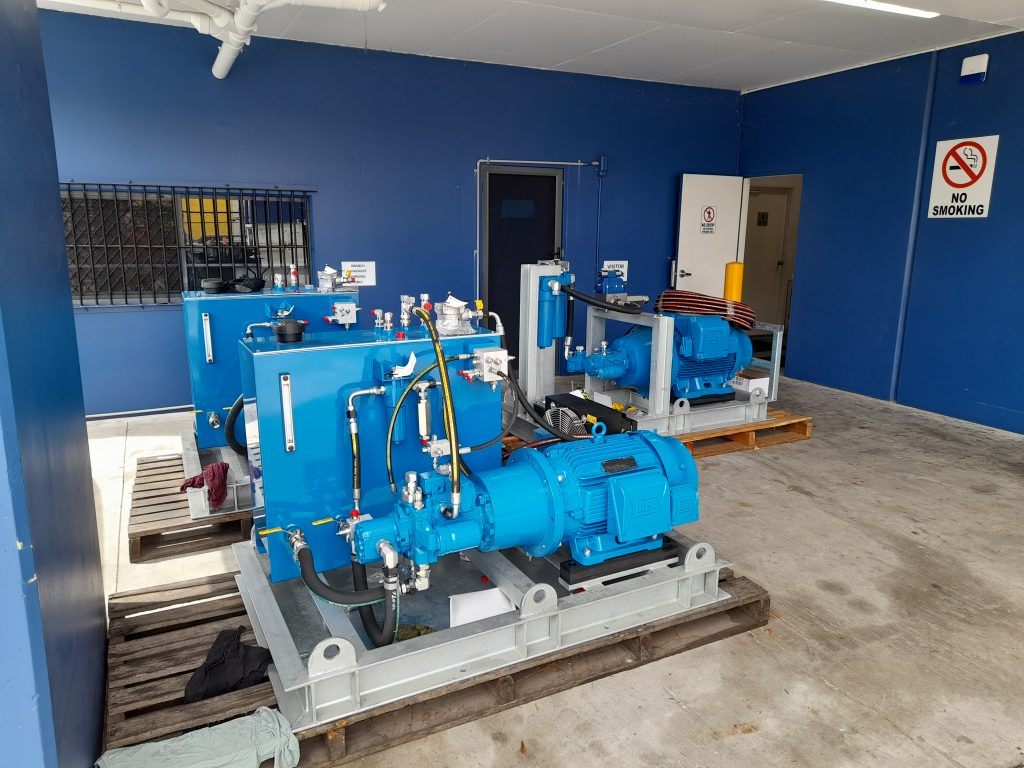
Rapid opening and closing of the split hopper doors is achieved through eight large hydraulic cylinders. The system is powered by an open-loop hydraulic power unit, featuring a double vane pump driven by a 55kW electric motor, delivering the flow and pressure required for fast, repeatable door operation.
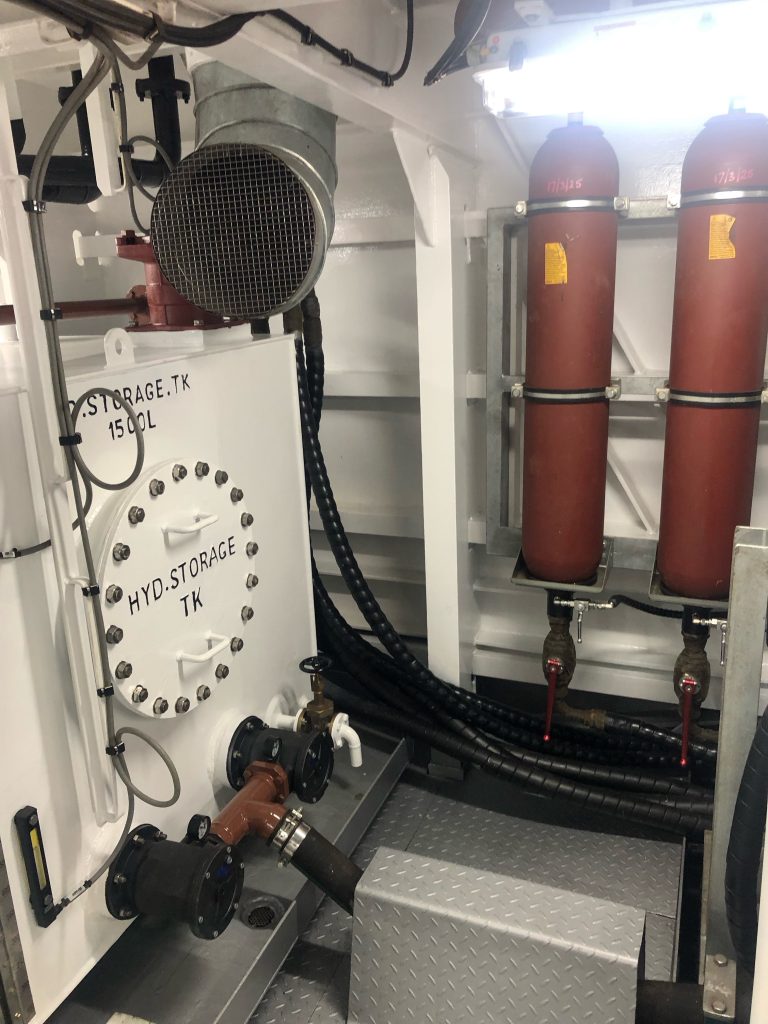
Because the cylinder volumes are substantial, hydraulic accumulators are integrated into the circuit to support peak flow demand – enabling the doors to move quickly without requiring the HPU to meet instantaneous peak demand alone. Operation is controlled electronically from the wheelhouse via a Berendsen-supplied control panel.
Key system features:
- 8 x large hydraulic cylinders for hopper door actuation (third-party cylinders supplied within Berendsen’s package)
- Open-loop HPU with double vane pump driven by a 55kW electric motor
- Hydraulic accumulators to meet high peak flow demands for rapid door movement
- Electronic wheelhouse control via Berendsen-supplied control panel
Constant-Tension Bow Winch System
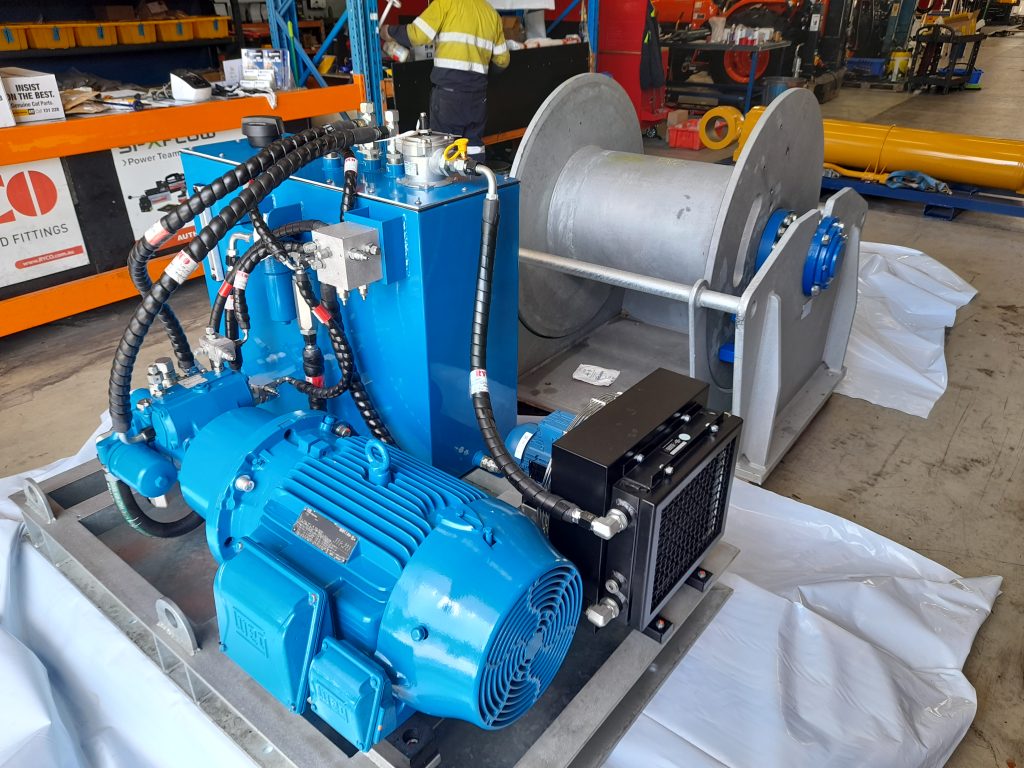
To keep the vessel hard against the wharf throughout loading, Berendsen supplies a 12-tonne constant tension bow winch system. As the barge fills and sinks lower in the water – and as swell causes movement – the winch automatically maintains controlled tension so the vessel stays in position.
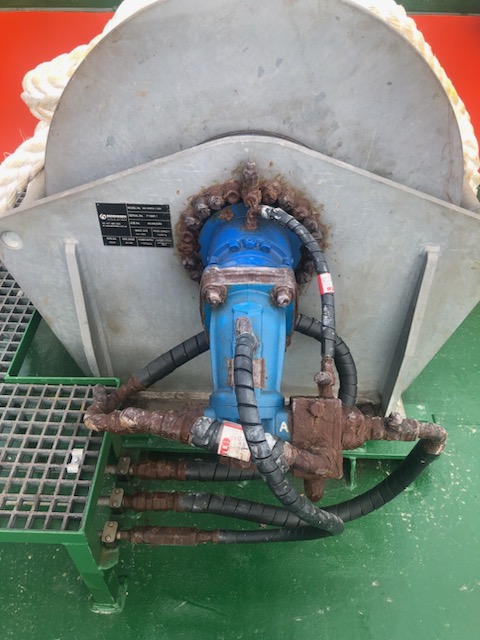
The winch is driven by a closed-loop transmission HPU. Berendsen supplies the complete winch package: drum, gearbox, hydraulic motor, supporting hydraulic circuit, and a remote control console for manual operation when required.
Key system features:
- 12-tonne constant-tension bow winch to maintain wharf contact during loading
- Closed-loop transmission HPU driving the winch
- Winch drum, gearbox, and hydraulic motor supplied as part of the package
- Remote control console for manual operation when required
Long-Term Design Strategy: Commonality Across the Fleet
The core design has been in service for approximately 25 years and is deliberately maintained for commonality and interchangeability across the near-identical vessels in the fleet. In a remote operation like this, that strategy has real operational value: if one vessel is down, parts can be shared from another. Procedures are familiar. Spares are predictable. Performance is known.
This does not mean the system is static. Improvements are introduced carefully and conservatively – typically small refinements that lift reliability and serviceability without undermining interchangeability across the fleet. Examples include component orientation changes to improve access for maintenance, layout refinements within the vessel structure, and the addition of oil cooling where operating temperatures require it.
Berendsen retains the complete design library and documentation for this program, enabling each new vessel build to proceed without re-engineering the system from scratch. That institutional knowledge is part of what makes Berendsen the stipulated OEM for this package.
Delivery Model: Built in Brisbane, Commissioned Across Three Countries
The build and commissioning approach is structured to reduce risk at every stage of the vessel program, for both the shipbuilder and the end user.
Stage 1 – Build and Factory Acceptance Testing in Brisbane
Berendsen procures all components, assembles both hydraulic systems, completes finishing including paint, and runs full factory acceptance testing in Brisbane. Certification paperwork and operating manuals are produced as part of the package, ensuring performance and documentation are aligned before the systems leave Australia.
Stage 2 – Installation and Initial Commissioning in Batam, Indonesia
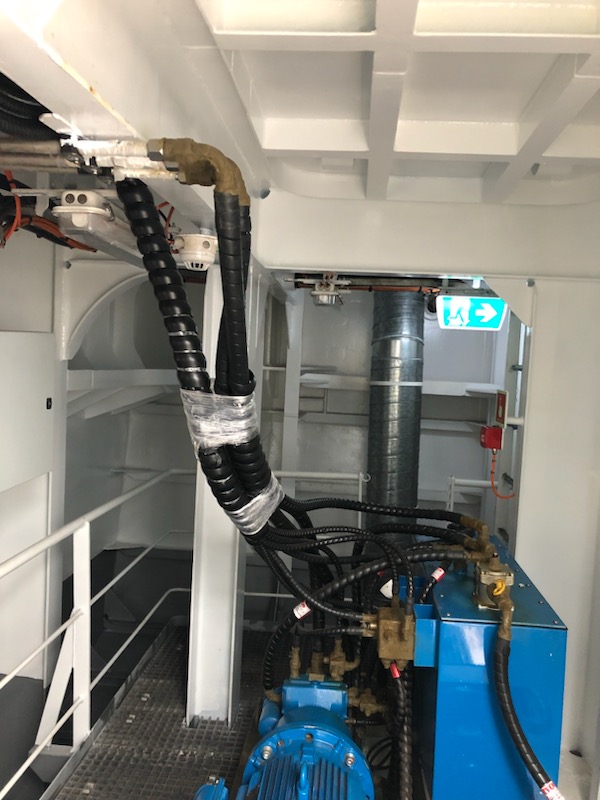
The vessels are constructed at the shipbuilder’s Batam facility. Berendsen technicians travel via Singapore to install the hydraulic systems onboard, complete dry commissioning and functional checks, and support splash testing as the vessel is launched. Resourcing for this phase is typically two technicians.
Stage 3 – Final Commissioning and Load Testing in Lihir, Papua New Guinea
Once the vessel is tugged to the Lihir site, Berendsen performs final commissioning in the actual operating environment. The vessel undergoes thorough operational cycling and sequencing, followed by final checks and full system quality control before sign-off. This phase is typically handled by a single technician once the major installation work is complete.
Typical Project Cycle
| Phase | Duration |
| Build, testing & documentation (Brisbane) | ~30 working weeks |
| Shipment via Singapore | Transit period |
| Installation & commissioning (Batam, Indonesia) | ~2 weeks |
| Vessel transit to PNG | Tugged to Lihir site |
| Final commissioning & load testing (Lihir, PNG) | ~5 days |
Operating Across Borders and Cultures
A project of this kind demands more than hydraulic engineering capability. Berendsen must navigate contract structures, payment terms, and governance requirements with an international shipbuilder; align expectations across different business cultures; and manage work in third-country environments where accommodation, health and safety conditions, and logistics can differ markedly from home.
Executing consistently in these environments – safely, professionally, and to Berendsen’s own quality standards regardless of what the context presents – is part of what makes the long-term relationship with the shipbuilder and the mining customer work. The measure of success is simple: deliver the same quality outcome, every time.
Outcomes
25 Years as Stipulated OEM
Berendsen has been the trusted hydraulic systems supplier for this vessel program for approximately 25 years – a relationship that speaks directly to the reliability and consistency of their delivery.
Proven Fleet Reliability
The hydraulic package is engineered for fast, repeatable cycles in a remote, high-consequence environment. Design commonality across the fleet supports shared spares, familiar procedures, and predictable performance.
End-to-End Delivery
Factory build, testing, documentation, and three-country commissioning managed by a single team – reducing interface risk for the shipbuilder and end user alike.
Design Continuity & Documentation
Full design library and documentation retained by Berendsen, enabling repeat builds without re-engineering and protecting the end user’s long-term serviceability.
“We procure the materials and all the components, we assemble, we paint, we do all the factory acceptance tests here. The certifications, the operating manuals… everything comes out of our Clontarf workshop.”
Stephen Buttery – Branch Manager, Berendsen Fluid Power
Why This Project Matters
The Lihir split barge program is one of the clearest demonstrations of what long-term engineering partnership looks like in practice. It is not a single project – it is a 25-year program of repeated delivery to a consistent standard, in one of the most logistically complex environments Berendsen operates in.
Several things make this program worth highlighting as a Berendsen capability story:
- OEM design ownership: retaining the full design library and producing repeat builds without re-engineering is a mark of deep technical stewardship – and a genuine service to the end user.
- Multi-country execution: building in Brisbane, commissioning at the shipbuilder’s facility in Indonesia, and completing load testing in Papua New Guinea in a single coordinated program requires logistics discipline that few contractors can manage.
- Fleet strategy thinking: the decision to maintain commonality and interchangeability across vessels is not just a design choice – it is an operational risk management strategy for the mine site. Berendsen has sustained that strategy across decades.
- Relationship depth: being stipulated as the OEM by an international shipbuilder for a critical vessel system reflects the trust that comes from consistent, professional performance over many years.
For customers evaluating Berendsen for complex, long-duration, or multi-site hydraulic programs, this project is a direct reference point.
About Berendsen Fluid Power
Berendsen Fluid Power supports industrial, marine and resources operations with hydraulic engineering, system builds, service and field commissioning. With deep experience in complex hydraulic applications and a proven ability to deliver in demanding environments, Berendsen helps customers reduce risk, improve reliability and keep critical equipment running.